
Why You’ll Love this Fiery Kung Pao Chicken
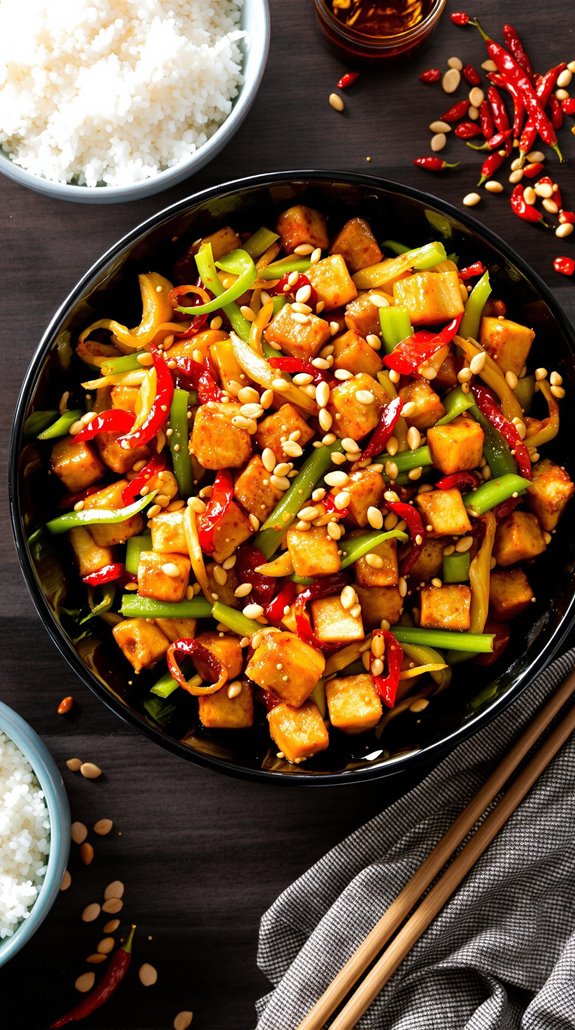
If you’ve been searching for the perfect balance of spicy, sweet, and savory flavors, my Kung Pao Chicken recipe is about to become your new weeknight favorite. The combination of dried red chilies, chili-garlic sauce, and aromatic garlic creates that signature heat that tingles without overwhelming your taste buds.
What makes this dish special? It’s the harmonious contrast between the crunchy peanuts, crisp celery, and tender chicken pieces. The sauce—a magnificent blend of black vinegar, hoisin, and sesame oil—coats every morsel with complex umami flavors that’ll make you forget about takeout forever.
Ready in under 30 minutes and requiring just one wok, this dish delivers restaurant-quality results with minimal effort. Who doesn’t love a meal that’s both impressive and efficient?
What Ingredients are in Fiery Kung Pao Chicken?
Kung Pao chicken is a deliciously spicy and savory Chinese dish that delivers a perfect balance of heat, sweetness, and nuttiness. This classic recipe features tender chicken pieces stir-fried with vegetables and peanuts in a rich, flavorful sauce. The combination of dried chilies and chili-garlic sauce gives it that signature fiery kick that Kung Pao dishes are known for.
- 3/4 pound boneless skinless chicken, cut into 1-inch pieces
- 2 tablespoons oyster sauce
- 1 teaspoon cornstarch (for marinade)
- 1/4 cup Chinese black vinegar or balsamic vinegar
- 1/4 cup chicken broth
- 3 tablespoons Chinese rice wine or dry sherry
- 2 tablespoons hoisin sauce
- 1 tablespoon soy sauce
- 2 teaspoons sesame oil
- 2 teaspoons chili-garlic sauce
- 2 teaspoons sugar
- 2 1/2 tablespoons cooking oil
- 8 small dried red chilies
- 4 teaspoons minced garlic
- 2 stalks celery, diced
- 1/2 red bell pepper, cut into 1-inch squares
- 1 (8 ounce) can sliced bamboo shoots, drained
- 2 teaspoons cornstarch dissolved in 1 tablespoon water
- 1/3 cup roasted peanuts
When shopping for these ingredients, look for authentic Chinese products when possible—especially for items like black vinegar, rice wine, and hoisin sauce. The dried red chilies add visual appeal and flavor, but you can adjust the quantity based on your heat preference. If you can’t find certain specialty ingredients, the suggested substitutions (like balsamic for Chinese black vinegar) will still yield delicious results. Just remember, the peanuts aren’t optional—they provide that wonderful crunch and nutty flavor that makes Kung Pao chicken so distinctive.
How to Make this Fiery Kung Pao Chicken
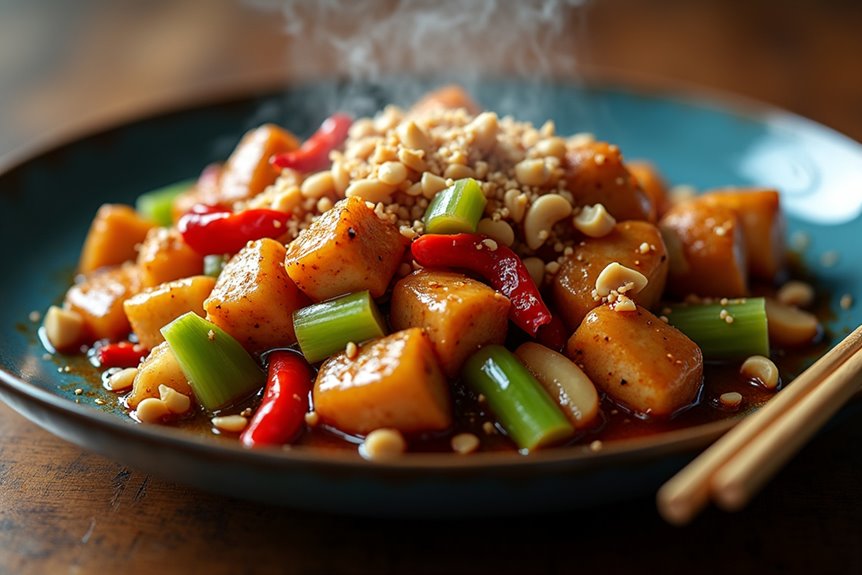
To start making this mouthwatering Kung Pao Chicken, you’ll first need to marinate your chicken. In a bowl, combine 2 tablespoons of oyster sauce and 1 teaspoon of cornstarch, then add your 3/4 pound of boneless skinless chicken pieces (cut into 1-inch cubes). Give everything a good stir, making sure each piece is well-coated, and let it rest for about 10 minutes while the flavors meld together.
Meanwhile, prepare your sauce by mixing 1/4 cup Chinese black vinegar (or balsamic vinegar), 1/4 cup chicken broth, 3 tablespoons Chinese rice wine, 2 tablespoons hoisin sauce, 1 tablespoon soy sauce, 2 teaspoons sesame oil, 2 teaspoons chili-garlic sauce, and 2 teaspoons sugar in a separate bowl.
Now comes the exciting part—the stir-fry. Heat your wok over high heat until it’s nice and hot, then add 2 tablespoons of cooking oil, swirling it around to coat the sides. For best results, consider using a complete wok cooking system that includes the proper tools for authentic Chinese cuisine. Toss in those 8 small dried red chilies and stir them around for about 10 seconds until they become fragrant. Can you smell that spicy aroma filling your kitchen? Next, add your marinated chicken pieces and stir-fry them until they’re cooked through.
Then incorporate 4 teaspoons of minced garlic, 2 diced celery stalks, 1/2 red bell pepper cut into 1-inch squares, and an 8-ounce can of drained bamboo shoots. Keep everything moving in the wok as the vegetables soften slightly but maintain their crunch.
To finish this fiery dish, pour in your prepared sauce and bring it to a simmer. For that perfect restaurant-style thickness, add the 2 teaspoons of cornstarch dissolved in 1 tablespoon of water, stirring continuously as the sauce thickens. Finally, toss in 1/3 cup of roasted peanuts for that signature crunch and nutty flavor that makes Kung Pao Chicken so irresistible. The contrast between the spicy sauce, tender chicken, crisp vegetables, and crunchy peanuts creates a symphony of textures and flavors that’ll have everyone asking for seconds.
Fiery Kung Pao Chicken Substitutions and Variations
Many home cooks worry about missing ingredients when making this classic Chinese dish, but don’t stress—Kung Pao Chicken is incredibly adaptable.
No Chinese black vinegar? Balsamic works beautifully. Can’t find rice wine? Dry sherry steps in perfectly. I’m always amazed at how forgiving this recipe is with protein swaps too—try firm tofu, shrimp, or even beef instead of chicken for a delicious twist.
The vegetables are equally flexible. No bamboo shoots? Toss in water chestnuts, zucchini, or carrots. Want it milder? Reduce the dried chilies and chili-garlic sauce. Craving extra heat? Add a dash of Sichuan peppercorns for that authentic numbing sensation.
Just don’t skip the peanuts—they provide that signature crunch that makes Kung Pao, well, Kung Pao.
What to Serve with Fiery Kung Pao Chicken
Now that we’ve got our adaptable Kung Pao chicken recipe down, let’s talk about what to pair with this bold dish for a complete meal. The spicy, savory flavors call for simple sides that balance rather than compete with our star attraction.
I always recommend fluffy white rice—jasmine or basmati works beautifully—to soak up that addictive sauce. Can you imagine letting any of it go to waste?
For vegetables, simple stir-fried bok choy or steamed broccoli provides a clean, green counterpoint.
Want something invigorating? A cucumber salad with rice vinegar and a touch of sugar cools the palate between spicy bites. And don’t forget a light soup, like egg drop or hot and sour, to round out your homemade Chinese feast.
Final Thoughts
I’ve wrapped up this Kung Pao chicken recipe with the hope that it brings a burst of excitement to your dinner table. Martin Yan’s approach balances those classic flavors we all crave—spicy, sweet, tangy, and savory—in one spectacular dish.
What makes this recipe special? It’s the attention to detail, like marinating the chicken first and toasting those dried chilies until they’re fragrant. The sauce, with its blend of black vinegar, hoisin, and chili-garlic paste, creates that signature Kung Pao flavor that’s impossible to resist.