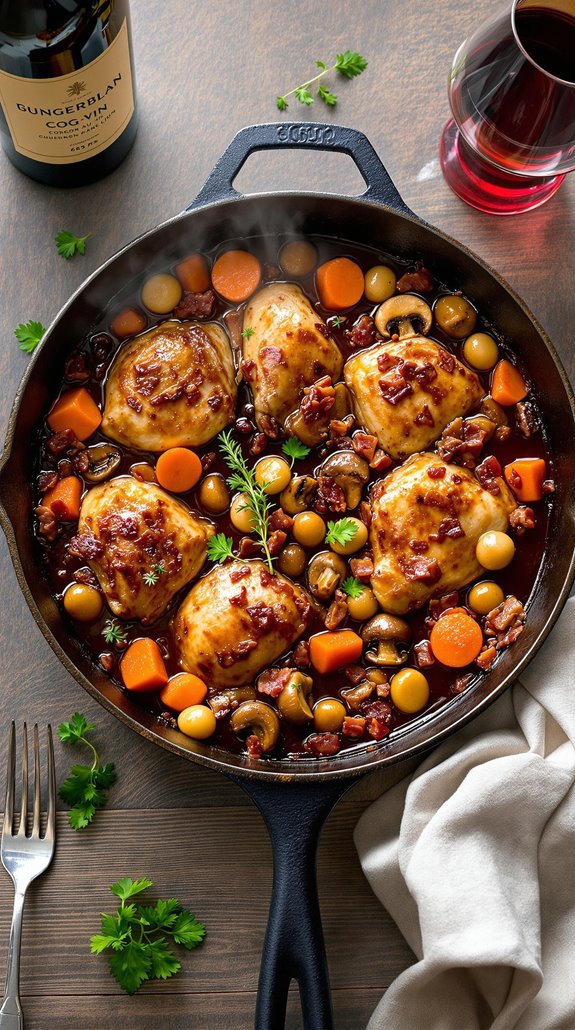

Why You’ll Love this Classic French Coq Au Vin
Although French cuisine might seem intimidating at first glance, this classic Coq au Vin recipe will quickly become a favorite in your home. There’s something magical about transforming simple ingredients into a dish that tastes like it came straight from a Parisian bistro.
I’m passionate about this recipe because it creates tender chicken that falls off the bone, swimming in a rich, velvety sauce that’s complex yet comforting. The combination of bacon, mushrooms, and burgundy wine creates layers of flavor that develop as it slowly simmers. Can you imagine that aroma filling your kitchen?
What I love most is how impressive this dish looks when served, yet it’s actually quite forgiving for home cooks. Perfect for Sunday dinner or when you want to wow dinner guests without stress.
What Ingredients are in Classic French Coq Au Vin?
Coq au vin, that quintessential French comfort food, transforms humble chicken into something truly magnificent through the magic of slow cooking in wine. This rustic dish originated as a way for French country folk to tenderize tough roosters (the literal “coq” in coq au vin), but today we typically use regular chicken pieces. The deep, rich flavors develop as the chicken slowly braises in burgundy wine, absorbing all those wonderful aromatics.
Ingredients:
- 3-3½ pounds chicken pieces (skin optional)
- ½ cup flour
- 1 teaspoon salt (plus additional ½ teaspoon for the sauce)
- ¼ teaspoon pepper
- 6 slices bacon
- 6 small onions
- ½ pound mushrooms, sliced
- 4 carrots, halved or julienned
- 1 cup chicken broth
- 1 cup red Burgundy wine
- 1 garlic clove, crushed
- ½ teaspoon thyme leaves
- 1 bay leaf
- 2 sprigs parsley (tied in cheesecloth or placed in a tea ball)
While traditional coq au vin calls for Burgundy wine (now called Pinot Noir in many regions), you can substitute another dry red wine if needed—though purists might raise an eyebrow. Don’t be tempted to use “cooking wine” from the grocery store; a good rule of thumb is to cook with a wine you’d actually enjoy drinking. And speaking of authenticity, some traditional recipes call for chicken blood as a thickener, but modern versions like this one rely on the flour coating instead. Much more approachable for the home cook, wouldn’t you agree?
How to Make this Classic French Coq Au Vin
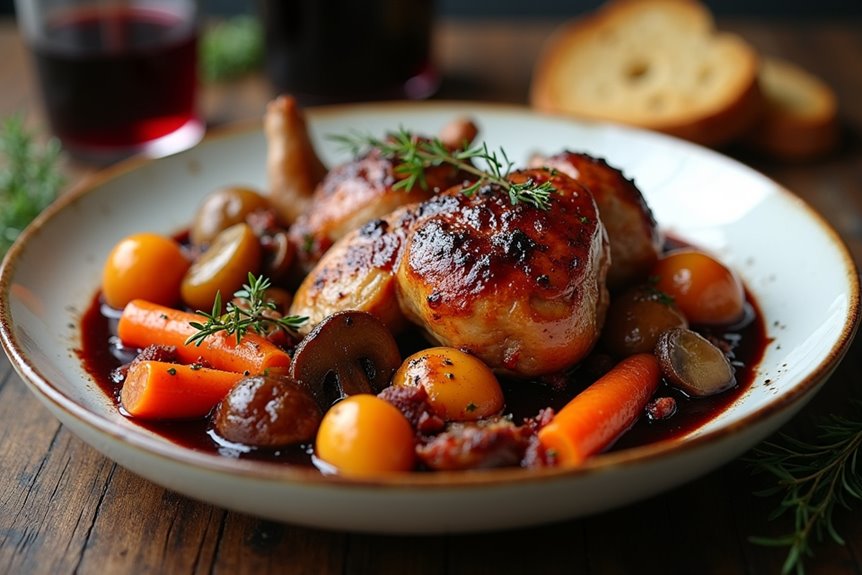
Creating this iconic French dish starts with preparing your chicken and coating it properly. Mix 1/2 cup flour with 1 teaspoon salt and 1/4 teaspoon pepper in a paper or plastic bag. Drop your 3-3 1/2 pounds of chicken pieces (skin removed) into the bag and give it a good shake to coat them evenly. This flour coating will help thicken your sauce later—a little culinary multitasking at its finest.
Next, fry 6 slices of bacon in a large skillet until crisp, then set those delicious bacon bits aside (try not to snack on them while cooking, though the temptation is real).
Now comes the layering of flavors that makes Coq au Vin so magnificent. Brown the flour-coated chicken in those glorious bacon drippings until golden, then temporarily remove to a plate. In that same flavor-packed skillet, add 6 small onions and 1/2 pound of sliced mushrooms, cooking until the onions become tender. After draining off excess fat, return the chicken to the skillet and add the remaining ingredients: 4 halved carrots, 1 cup chicken broth, 1 cup red Burgundy wine, 1 crushed garlic clove, 1/2 teaspoon salt, 1/2 teaspoon thyme leaves, 1 bay leaf, and 2 sprigs of parsley (tied in cheesecloth for easy removal later). For the best results, use a quality stainless steel cookware that distributes heat evenly and helps achieve that perfect caramelization. Don’t forget to sprinkle those reserved bacon bits back in—they’re like little flavor bombs waiting to enhance every bite. Cover and let the mixture simmer for about 1 hour, or until the chicken is tender and the sauce has reduced to a rich, velvety consistency. The aroma filling your kitchen? That’s what Julia Child would call the essence of French country cooking.
Classic French Coq Au Vin Substitutions and Variations
Versatility shines at the heart of this beloved French classic, allowing you to adapt it to your pantry and preferences. Can’t find Burgundy wine? Any full-bodied red wine works beautifully—Pinot Noir or Merlot bring lovely depth without breaking the bank.
For a lighter version, I’d suggest removing the chicken skin as noted in the recipe, or swapping in boneless thighs for quicker cooking. Pearl onions can replace small onions for a more traditional approach, while white button mushrooms stand in perfectly for any fancy fungi.
Don’t have bacon? Pancetta or even salt pork will provide that essential smoky foundation. For herbs, dried thyme works in a pinch (use 1/4 teaspoon instead), and a sprinkle of fresh parsley at serving time brightens everything up.
What to Serve with Classic French Coq Au Vin
When planning the perfect accompaniment to your coq au vin, traditional French sides truly shine as complementary partners to this rich, wine-infused dish. I always reach for crusty French bread or buttery mashed potatoes first—something to soak up that heavenly sauce, because letting it go to waste would be culinary sacrilege.
A simple green salad with a light vinaigrette adds brightness against the deep flavors. Haricots verts (those delicate French green beans) or glazed carrots provide color and texture without competing for attention. Trust me, they know their role.
And wine? A medium-bodied Burgundy—the same one you used for cooking, ideally—creates harmony at the table. Nothing fancy needed, just honest companions for a dish that already sings.
Final Thoughts
Though mastering coq au vin might seem intimidating at first glance, this classic French dish rewards even novice cooks with its forgiving nature and impressive results. The magic happens as the wine and chicken slowly meld together, creating depth that simply can’t be rushed.
The process is therapeutic—the rhythmic chopping, the sizzle of bacon, the way your kitchen fills with an aroma that makes time stand still. Isn’t it amazing how a handful of humble ingredients transform into something so sophisticated?