Why You’ll Love this Hot and Sour Soup
While many restaurant versions can disappoint, this authentic Hunan hot and sour soup recipe will transport your taste buds straight to China. I’m obsessed with the perfect balance of tanginess from the vinegar and heat from the cayenne and white pepper—it’s exactly what you need on a chilly evening or when fighting off a cold.
The combination of textures is what really makes this soup special. Tender strips of pork, silky tofu, chewy lily buds, and crunchy bamboo shoots create a complex mouthfeel in every spoonful. And can we talk about those wood ear mushrooms? Their distinctive snap adds such a wonderful dimension.
What I love most is how customizable the heat level is. Need more kick? Just add extra cayenne.
What Ingredients are in Hot and Sour Soup?
Betty Foo’s Hot and Sour Soup from Hunan Restaurant features a delightful blend of textures and flavors that create that perfect balance between spicy heat and tangy sourness. This classic Chinese soup requires quite a few ingredients, but don’t let the list intimidate you—many are pantry staples if you cook Asian cuisine regularly, and the rest can be found at most Asian grocery stores.
- 1/2 cup dried lily buds (day lilies)
- 1/2 cup dried wood ear or tree ear mushrooms
- 1/2 lb firm tofu, julienned
- 3/4 cup pork, finely julienned
- 2 eggs, lightly beaten
- 1/2 cup bamboo shoots, julienned
- 2 tablespoons cornstarch
- 1/2 cup water
- 5 tablespoons distilled white vinegar
- 1/2 teaspoon sugar
- 5 ounces soy sauce
- 1 teaspoon salt
- 1/4 teaspoon garlic powder
- 1 teaspoon cayenne pepper, ground
- 1 teaspoon white pepper, ground
- 6 cups chicken broth
- 2 tablespoons scallions, finely chopped
- 2 tablespoons gingerroot, finely chopped
- 1 teaspoon sesame oil (optional, preferably made from toasted sesame seeds)
When shopping for these ingredients, keep in mind that the dried lily buds and wood ear mushrooms will need to be rehydrated before use. For vegetarians, the pork can be omitted, and vegetable broth can substitute for chicken broth without sacrificing too much flavor. The balance of vinegar, soy sauce, and peppers is what gives this soup its characteristic hot and sour profile, so don’t skimp on these essential elements. And remember, the quality of your tofu matters—firm tofu holds up best in the hot soup.
How to Make this Hot and Sour Soup
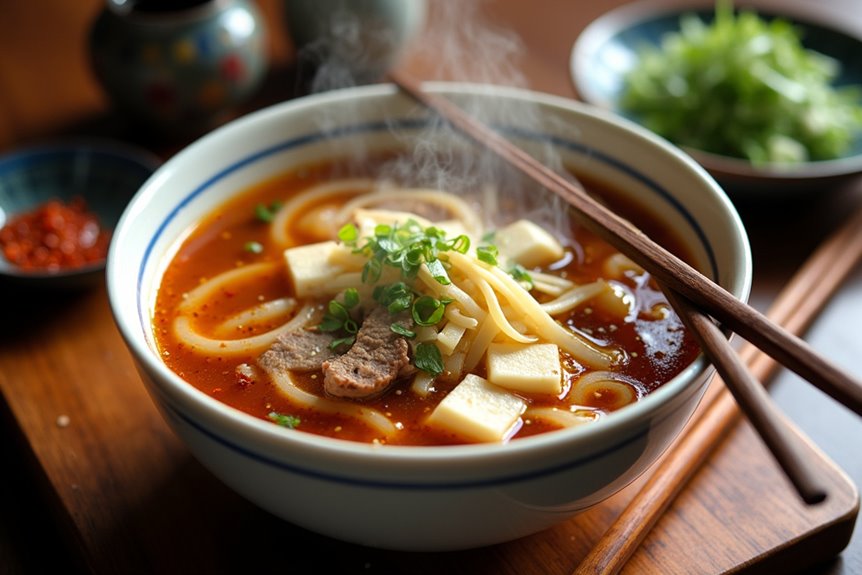
To make this authentic Hunan hot and sour soup, start by preparing your dried ingredients. Take 1/2 cup of dried lily buds and soak them in warm water for about 20 minutes to rehydrate. Once softened, cut off the tough stem tips and slice them lengthwise.
Similarly, soak 1/2 cup of dried wood ear mushrooms until they plump up. While these are soaking, julienne 1/2 pound of firm tofu (typically one block), 3/4 cup of pork (or your vegetarian substitute), and 1/2 cup of bamboo shoots into thin, matchstick-sized pieces.
Next, bring 6 cups of chicken broth to a simmer in a large pot. Add your rehydrated lily buds, mushrooms, julienned pork, tofu, and bamboo shoots.
In a small bowl, create a slurry by mixing 2 tablespoons of cornstarch with 1/2 cup of water until smooth. For the distinctive hot and sour flavors, combine 5 tablespoons of white vinegar, 1/2 teaspoon of sugar, 5 ounces of soy sauce, 1 teaspoon of salt, 1/4 teaspoon of garlic powder, 1 teaspoon of cayenne pepper, and 1 teaspoon of white pepper. Pour this flavor mixture into the simmering soup, followed by the cornstarch slurry to thicken.
As the soup thickens, slowly drizzle in 2 lightly beaten eggs while stirring gently to create those beautiful egg ribbons throughout the soup. Finish by adding 2 tablespoons each of finely chopped scallions and ginger, and if desired, a teaspoon of sesame oil for that aromatic finish. This final touch of sesame oil (preferably from toasted seeds) adds a nutty depth that really ties all the bold flavors together. For best results, prepare this soup using a traditional Asian wok cookware set which distributes heat more evenly than standard pots. Give it one last stir, and your steaming bowl of hot and sour soup is ready to warm both body and soul.
Hot and Sour Soup Substitutions and Variations
Now that you know the basic recipe, let’s talk about making this soup your own with some clever substitutions and variations. If you’re vegetarian, simply swap the pork for extra firm tofu or mushrooms, and use vegetable broth instead of chicken. Not a fan of spice? Reduce the cayenne pepper to suit your taste buds.
Can’t find lily buds? No problem. Enoki mushrooms make a decent stand-in, though the flavor profile shifts slightly. For those avoiding cornstarch, arrowroot powder works wonderfully as a thickener.
I love adding a handful of spinach or bok choy for extra nutrients. And if fresh ginger isn’t available, ground ginger will do in a pinch—about 1/4 teaspoon for every tablespoon of fresh.
What to Serve with Hot and Sour Soup
When diving into a steaming bowl of hot and sour soup, what accompaniments will create the perfect meal? I like to pair this bold, tangy soup with simple sides that balance its intense flavors. Steamed white rice is my go-to companion—it soaks up the savory broth beautifully and tempers the heat.
For a more substantial meal, consider crispy spring rolls or pan-fried dumplings. The contrasting textures—crunchy exterior against the soup’s silky broth—create a satisfying dining experience.
Vegetable dishes like stir-fried bok choy or Chinese broccoli offer a fresh counterpoint.
Want something lighter? A cucumber salad with rice vinegar dressing cleanses the palate between spoonfuls of that rich, peppery soup. Trust me, the cool crunch against hot spice is absolutely divine.
Final Thoughts
Hot and sour soup, with its perfect balance of spicy heat and tangy acidity, remains one of Hunan cuisine’s most beloved treasures. I’m always amazed at how such simple ingredients—dried lily buds, wood ear mushrooms, tofu, and pork—can transform into something so complex and satisfying.
The beauty of this recipe lies in its adaptability; you can adjust the vinegar and pepper to suit your taste preferences.