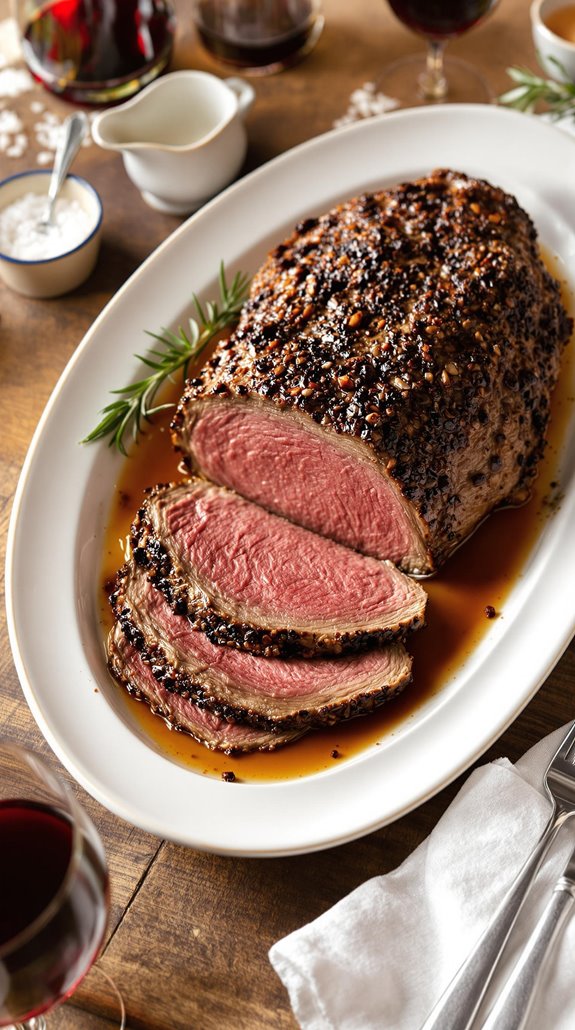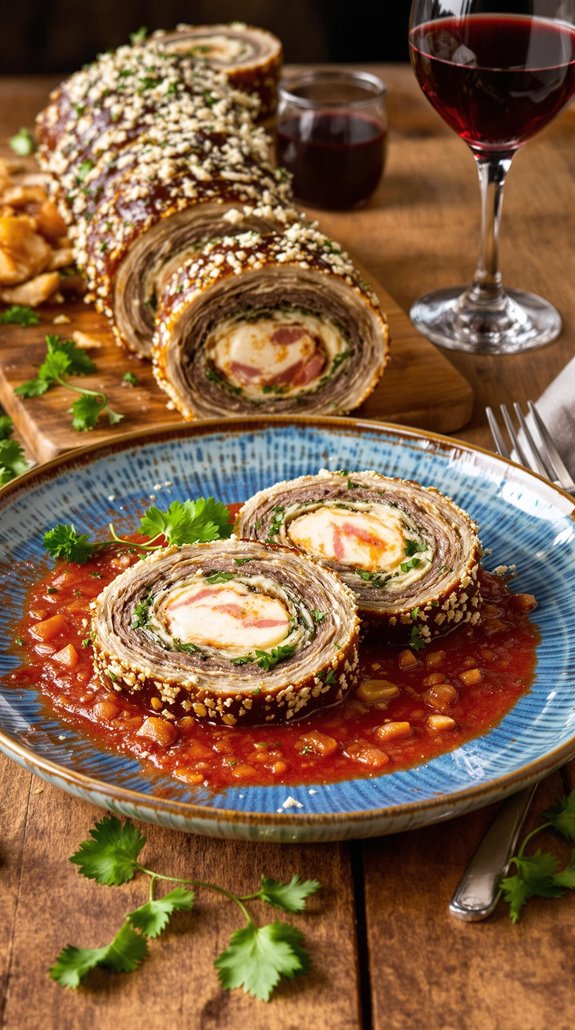

Why You’ll Love these Authentic Italian Braciole
If you’re searching for a showstopping Italian dish that combines simplicity with impressive results, these authentic Italian Braciole will absolutely win you over. The tender beef, pounded thin and stuffed with prosciutto, breadcrumbs, and Parmigiano-Reggiano, creates a perfect spiral of flavors that’s both rustic and refined.
I’m particularly fond of how the aromatic herbs—oregano, rosemary, and fresh parsley—infuse every bite with traditional Italian character. Can you imagine the look on your guests’ faces when you slice into these beautiful beef rolls? The slow-simmered tomato sauce, enriched with red wine and garlic, transforms these stuffed rolls into something truly magnificent. Perfect for Sunday dinners or special occasions. The best part? While they look complicated, the technique is surprisingly manageable for home cooks.
What Ingredients are in Authentic Italian Braciole?
Authentic Italian braciole is a mouthwatering rolled beef dish that brings together simple ingredients to create something truly special. The combination of thinly pounded beef wrapped around savory fillings and slow-cooked in a rich tomato sauce represents Italian comfort food at its finest.
Looking to recreate this classic dish in your own kitchen? You’ll need these essential ingredients:
- 1 (2-2½ lb) round steak, butterflied
- 1 lemon (for grated rind)
- Salt and pepper to taste
- 2½ teaspoons oregano
- ¼ lb prosciutto, thinly sliced
- 2 cups breadcrumbs
- ¼ lb Parmigiano-Reggiano cheese, grated
- ½ cup chopped parsley
- ½ teaspoon rosemary
- ½ cup flour
- ¼ cup olive oil
- 4 garlic cloves, finely chopped
- 1 small onion, diced
- ½ cup dry red wine
- 4-6 fresh tomatoes with juice, diced (or 2 15-ounce cans diced tomatoes)
When shopping for these ingredients, quality matters tremendously. The beef should be fresh and from a good butcher if possible. For the prosciutto and Parmigiano-Reggiano, authentic Italian varieties will give you the most traditional flavor, though they can be pricier than domestic alternatives. The wine doesn’t need to be expensive, but should be something you’d enjoy drinking—never cook with a wine you wouldn’t drink! And while canned tomatoes work perfectly fine, especially in winter, fresh tomatoes at the peak of ripeness will take this dish to another level during tomato season.
How to Make these Authentic Italian Braciole
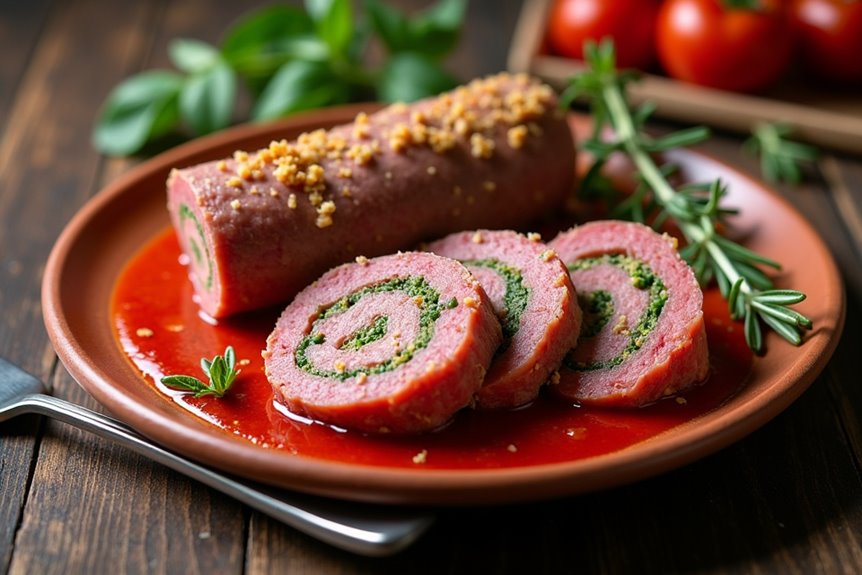
Start by preparing your beef. Take a 2-2½ pound round steak that’s been butterflied and lay it flat on your work surface. Cover it with waxed paper and pound it evenly with a meat mallet until it’s about ¼ inch thick—this tenderizes the meat and gives you more surface area for those delicious fillings. Season the meat by rubbing it with the grated rind of 1 lemon, some salt and pepper, and 1½ teaspoons of oregano. This aromatics base will infuse the meat with flavor as it cooks.
Now for the filling, which is what makes braciole so special. Layer ¼ pound of thinly sliced prosciutto evenly across the flattened steak. Sprinkle 2 cups of breadcrumbs, ¼ pound of grated Parmigiano-Reggiano cheese, and ½ cup of chopped parsley over the prosciutto. Using a high-end Italian cookware will enhance the authentic flavors of this traditional dish. Can you already imagine how fragrant this is going to be? Roll the steak tightly, making sure to tuck in the ends as you go—this keeps all that glorious filling from escaping during cooking. Secure your braciole roll with kitchen string, tying it at 1½ to 2-inch intervals. The tied roll should feel firm but not too tight.
Before braising, dust the exterior of your braciole with flour and sear it in ¼ cup of olive oil until beautifully browned on all sides. Then, in the same pan, sauté 4 finely chopped garlic cloves and 1 small diced onion until fragrant. Deglaze with ½ cup of dry red wine, scraping up all those flavorful bits from the bottom of the pan. Add your tomatoes (either 4-6 fresh or two 15-ounce cans), the remaining oregano, and the rosemary. Return the braciole to the sauce and let it simmer slowly, allowing the meat to become fork-tender while the sauce reduces and intensifies. The patience required here is worth every minute—what emerges is a classic Italian dish that’s both comforting and impressive.
Authentic Italian Braciole Substitutions and Variations
While traditional braciole calls for specific ingredients, you can branch out with several delicious alternatives that still honor the Italian spirit of this dish. Don’t have prosciutto? Regular ham works in a pinch, or try thin-sliced salami for a punchier flavor. Vegetarians might appreciate a version using large portobello mushrooms or eggplant slices instead of beef.
The filling offers endless creative possibilities. Swap breadcrumbs for panko, or try different cheeses like provolone or pecorino romano. Can’t find fresh herbs? Dried ones will do, just use about a third of the amount. For a modern twist, you might add pine nuts, raisins, or even a sprinkle of crushed red pepper flakes.
The slow-simmered sauce, too, welcomes variation—white wine instead of red, or a splash of balsamic vinegar for depth.
What to Serve with Authentic Italian Braciole
Because braciole stands as the undisputed star of any Italian dinner table, choosing the right supporting cast is essential for a truly memorable meal. I always recommend serving this rolled beef masterpiece alongside a generous portion of creamy polenta or perfectly al dente pasta to soak up that rich tomato sauce. Can you imagine anything more satisfying?
For vegetables, consider sautéed rapini with garlic, a crisp arugula salad dressed simply with lemon and olive oil, or roasted Brussels sprouts with pancetta.
Don’t forget the bread—a crusty Italian loaf is practically mandatory for sauce-mopping duties. And wine? A medium-bodied Chianti or Montepulciano complements the beef and tomato flavors beautifully, cutting through the richness while enhancing the herbs in the filling.
Final Thoughts
Now that we’ve covered serving suggestions, I’d like to offer some final reflections on this treasured recipe. Braciole isn’t just a dish—it’s a celebration of Italian culinary tradition, bringing families together around tables for generations. The combination of tender beef, savory prosciutto, and that perfectly seasoned breadcrumb filling creates something truly magical.
Don’t we all need recipes that impress without requiring culinary school credentials? This is definitely one of those dishes. The rolling technique might take practice, but isn’t that half the fun? Remember, if your first attempt isn’t perfect, the flavors will still be incredible. The most important ingredient is patience—letting those beef rolls simmer until they’re fork-tender and infused with that rich tomato sauce.