
Why You’ll Love this Authentic Filipino Pancit Bihon
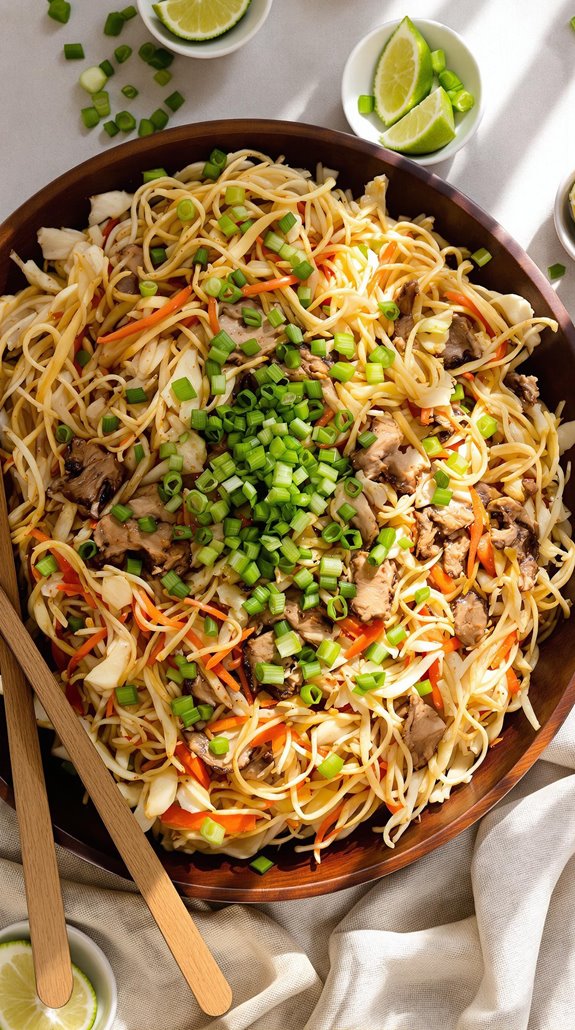
If you’ve been searching for a taste of authentic Filipino cuisine, this Pancit Bihon recipe is going to become your new favorite. The combination of tender rice noodles, savory pork, and crisp vegetables creates a perfect harmony of textures and flavors that transport you straight to the Philippines.
I’m particularly fond of how versatile this dish is—use leftover pork roast or mix in chicken and shrimp if you’re feeling adventurous. The secret lies in the delicate balance of soy sauce and fish sauce, giving the noodles that unmistakable umami depth that keeps you coming back for more.
And those fresh lime wedges? They add the perfect bright finish when squeezed over your serving. Trust me, your family will be requesting this colorful, satisfying one-pan wonder weekly.
What Ingredients are in Authentic Filipino Pancit Bihon?
Pancit Bihon is a beloved Filipino noodle dish that combines the perfect balance of savory flavors with a medley of proteins and vegetables. The beauty of this dish lies in its versatility and the way the rice noodles soak up all the delicious flavors. To create an authentic version at home, you’ll need a handful of key ingredients that bring this classic dish to life.
- 1 (6 ounce) package rice noodles
- 1 1/2 lbs cooked pork
- 3 tablespoons vegetable oil
- 2 garlic cloves, minced
- 1 medium onion, thinly sliced
- 3 tablespoons soy sauce
- 1 tablespoon fish sauce (nuoc mam)
- 1 head cabbage, cut into 1-inch wedges
- 2 carrots, julienned in 2-inch lengths
- 2 stalks celery, thinly sliced
- 1 (6 ounce) package shiitake mushrooms, stems removed and sliced
- 2 cups chicken broth
- 1 bunch green onion, thinly sliced
- 2 limes or lemons, cut in wedges
While this recipe calls for cooked pork, many variations of Pancit Bihon include combinations of pork, chicken, and shrimp. Feel free to customize the protein based on your preferences or what you have on hand. If starting with raw meat, simply poach it in water, cool, shred, and save the resulting broth to use in place of the chicken broth later in the recipe. The rice noodles should be soaked in hot tap water for about 20 minutes before cooking, which allows them to soften perfectly without becoming mushy when added to the final dish.
How to Make this Authentic Filipino Pancit Bihon
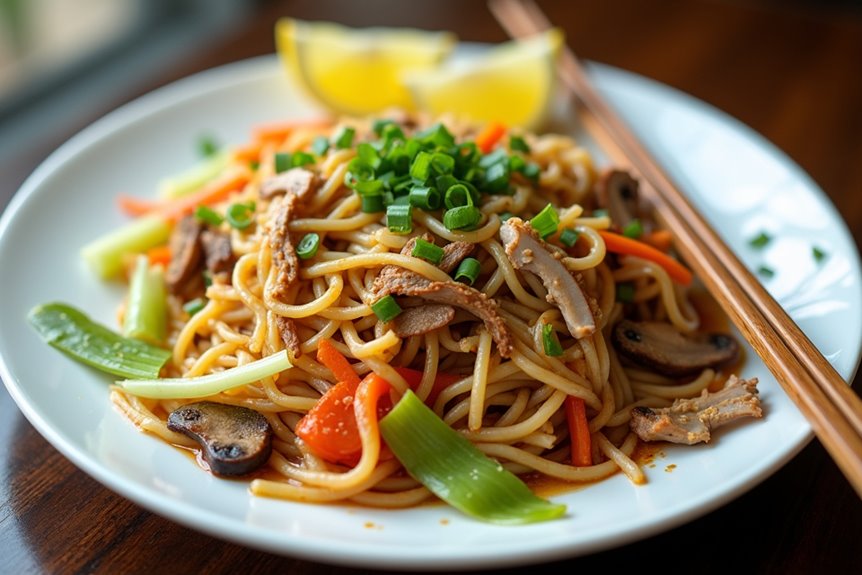
Start by preparing your rice noodles – they’re the star of this show. Soak 1 package (6 ounces) of rice noodles in hot tap water for about 20 minutes, then drain them in a colander. While they’re soaking, you can prep all your veggies and meat. If you’re not using leftover pork like the recipe suggests, you’ll want to poach about 1 1/2 pounds of raw pork in a small amount of water, then cool and shred it. Smart cooks save that poaching liquid to use later when the recipe calls for the 2 cups of chicken broth.
Now for the actual cooking. Heat 3 tablespoons of vegetable oil in a large pan, then sauté 2 minced garlic cloves and 1 medium thinly sliced onion until fragrant. Add your cooked pork, 3 tablespoons of soy sauce, and 1 tablespoon of fish sauce, stirring to combine those deep, savory flavors.
Next comes the veggie parade – 1 head of cabbage cut into wedges, 2 julienned carrots, 2 thinly sliced celery stalks, and 6 ounces of sliced shiitake mushrooms with stems removed. Pour in the 2 cups of chicken broth and let everything simmer until the vegetables start to soften but still maintain some crunch. Who wants mushy pancit? Not me.
Finally, add those soaked and drained rice noodles to the pan, gently folding them into the mixture until they absorb all those amazing flavors and the liquid. For authentic results, consider using a Filipino wok cooking set which distributes heat evenly for perfect noodle texture. The noodles should be tender but not soggy – they’ll continue soaking up flavor as they sit. Garnish your pancit with thinly sliced green onions from 1 bunch, and serve with lime or lemon wedges on the side. The citrus adds that perfect bright note that makes the whole dish sing. Honestly, the hardest part of making pancit bihon isn’t the cooking—it’s trying not to sneak bites before serving it to your guests.
Authentic Filipino Pancit Bihon Substitutions and Variations
While the traditional recipe yields delicious results, sometimes you’ll need to work with what’s in your pantry—and that’s perfectly fine! I’m a firm believer that pancit bihon is wonderfully adaptable.
Don’t have shiitake mushrooms? Button or cremini work beautifully. Vegetarians can skip the pork entirely and double up on mushrooms for that umami flavor. No fish sauce? Add a bit more soy sauce with a squeeze of lime for that tangy depth.
The protein options are endless—chicken, shrimp, tofu, or even leftover rotisserie chicken can replace the pork. And when it comes to veggies, anything goes. Snap peas, bell peppers, or bean sprouts make delightful additions. Can’t find rice noodles? In a pinch, thin vermicelli can stand in, though the texture will be slightly different.
What to Serve with Authentic Filipino Pancit Bihon
To round out your Filipino feast, you’ll want to pair your pancit bihon with complementary dishes that enhance the dining experience. I always recommend serving this noodle dish alongside lumpia (Filipino spring rolls) – those crispy, savory cylinders of goodness are practically mandatory at any Filipino gathering.
For a complete meal, consider adding some grilled meat skewers like barbecue pork or chicken inasal. A side of steamed white rice might seem redundant with the noodles, but trust me, it’s how Filipinos do it.
And don’t forget the calamansi! These tiny citrus fruits, similar to lime but sweeter, add the perfect finishing touch when squeezed over your pancit. Can’t find calamansi? The lime wedges from the recipe work wonderfully too.
Final Thoughts
After you’ve laid out your complete Filipino feast with all the delicious sides, let’s take a moment to appreciate what makes pancit bihon truly special. This dish tells a story of resilience, celebration, and the beautiful marriage of Chinese influence with Filipino ingenuity.
I’m constantly amazed by how such simple ingredients—rice noodles, vegetables, and meat—can transform into something so deeply satisfying. The way the noodles soak up that savory broth, the crunch of fresh vegetables, the tender bites of pork. Isn’t it wonderful how food connects us to cultures halfway around the world?