
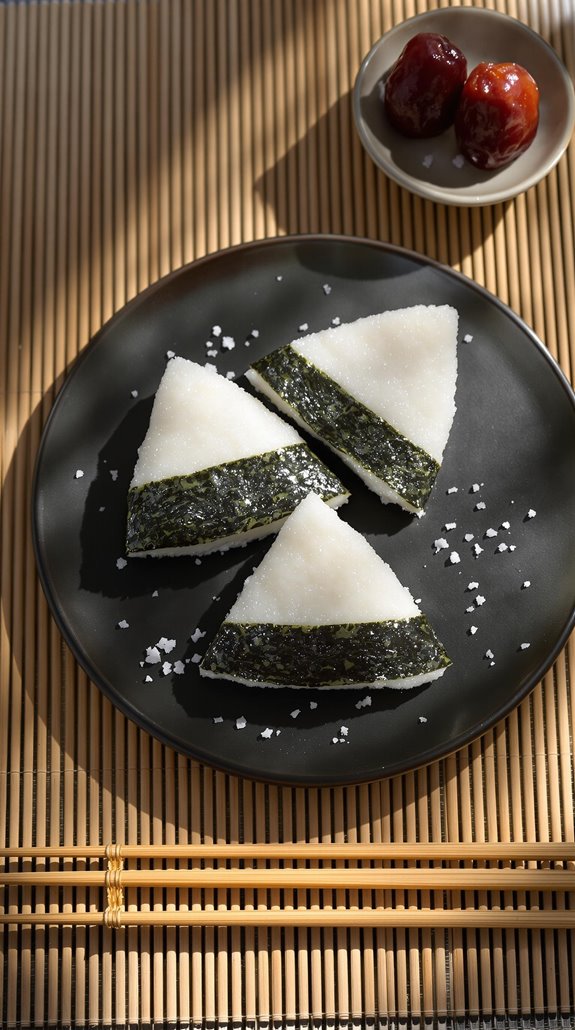

Why You’ll Love these Japanese Onigiri Rice Balls
Whether you’re new to Japanese cuisine or a seasoned pro, these onigiri rice balls are about to become your new comfort food obsession. There’s something magical about the simplicity of warm, salt-sprinkled rice wrapped around a tangy umeboshi center, all hugged by crisp nori seaweed.
I adore how versatile these little triangular treasures are—perfect for breakfast on the go, packed lunches, or midnight snacks. The best part? They’re surprisingly easy to make with just a handful of ingredients you can find at most Asian markets. No fancy equipment needed, just your hands and a bit of patience.
And can we talk about that satisfying texture contrast? Sticky rice, chewy seaweed, and that pop of sour-salty umeboshi. Absolute perfection.
What Ingredients are in Japanese Onigiri Rice Balls?
Japanese onigiri are those delightful triangular rice balls that combine simplicity and comfort in every bite. These portable snacks have been a staple in Japanese cuisine for centuries, and the beauty of onigiri lies in its basic ingredients that come together to create something truly satisfying. The traditional recipe keeps things wonderfully minimal, focusing on quality rice and just a few complementary components.
The ingredients are:
- 1 pound short-grain rice (Japanese rice preferred)
- 8 umeboshi (dried plum) for filling
- 8 nori sheets (dried seaweed), cut into strips
- Salt (for hands and optional seasoning)
- Water (for cooking rice and wetting hands)
When shopping for these ingredients, the rice quality matters most—look for Japanese short-grain varieties like koshihikari if possible, as they’ve the perfect stickiness for molding. Umeboshi brings a tangy, salty punch as the traditional filling, but don’t feel limited by tradition. Many modern onigiri contain tuna with mayonnaise, salmon, pickled vegetables, or even fried chicken. The nori should be crisp and fresh, as it provides not just flavor but also helps keep your hands clean while eating. Might seem like a short list, but these humble ingredients create one of Japan’s most beloved comfort foods.
How to Make these Japanese Onigiri Rice Balls
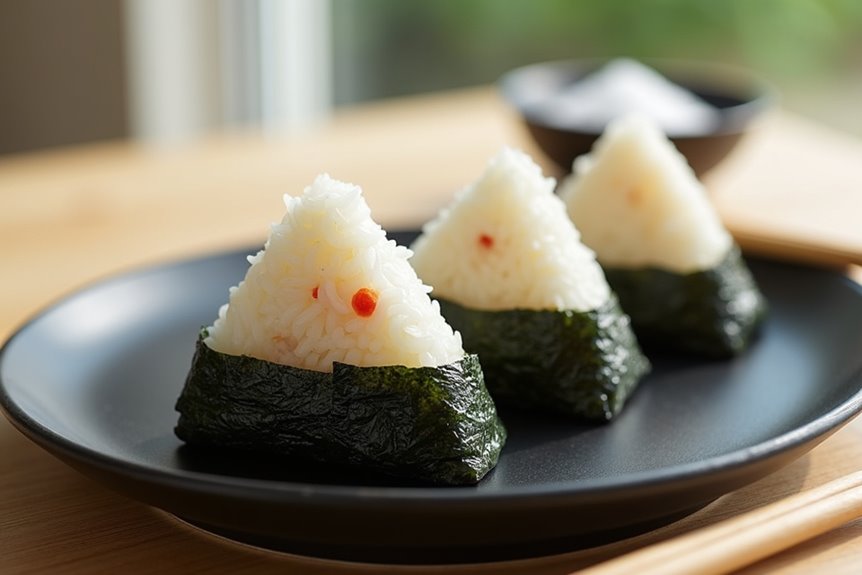
Making onigiri is a delightful process that’s both meditative and practical. Start by cooking 1 lb of short-grain rice according to package instructions. The rice needs to cool slightly—warm enough to be pliable but not so hot it burns your fingers. Trust me, there’s nothing worse than juggling scorching rice between your hands while trying to create a perfect triangle!
While the rice cools, prepare your workspace by cutting each nori sheet into 9 strips and having your 8 umeboshi (dried plum) ready to go. Now for the fun part: wet your hands and sprinkle them with salt. This isn’t just for flavor—it’s the secret trick that prevents the rice from sticking to your fingers like glue. Take a handful of warm rice and gently mold it into a triangular shape, leaving a small indentation in the middle. Press one umeboshi into this little pocket you’ve created, then continue molding the rice to fully enclose the filling. The rice should feel compact but not squished, firm enough to hold its shape but not dense as a brick. Finally, wrap your creation with those nori strips, positioning them to hold everything together. The contrast of the white rice against the dark seaweed isn’t just beautiful—it’s part of what makes onigiri instantly recognizable.
For authentic Asian cooking experiences, a proper Thai cooking wok can be a valuable addition to your kitchen arsenal when preparing complementary dishes to serve alongside onigiri. These rice balls can be enjoyed immediately (my preferred way) or stored for later as a convenient grab-and-go meal. The beauty of onigiri lies in their simplicity and versatility—once you’ve mastered the basic technique with umeboshi, you might find yourself experimenting with all sorts of fillings. And remember, perfect triangles come with practice, so don’t worry if your first few look more like abstract art than traditional onigiri. They’ll still taste wonderful.
Japanese Onigiri Rice Balls Substitutions and Variations
While traditional umeboshi filling holds a special place in onigiri history, the possibilities for these versatile rice balls extend far beyond dried plums. I love switching things up with canned tuna mixed with mayo, grilled salmon flakes, or even leftover teriyaki chicken.
Don’t have short-grain rice? Medium-grain will work in a pinch, though the texture won’t be quite as sticky. No nori? Try wrapping with thinly sliced cucumber or pickled daikon for an invigorating twist.
For vegetarian options, consider kimchi, avocado with soy sauce, or seasoned roasted mushrooms. You can also experiment with the shape—triangles are traditional, but rounds and cylinders are perfectly acceptable, easier for beginners, and just as delicious. The beauty of onigiri? It’s endlessly customizable.
What to Serve with Japanese Onigiri Rice Balls
Now that you’ve mastered the art of customizing your rice balls, let’s talk about what goes alongside them. Onigiri are perfect on their own as a snack, but they truly shine as part of a larger meal.
I love pairing these triangular treats with a simple miso soup—the savory broth complements the rice beautifully. A side of quick-pickled vegetables adds the perfect tangy crunch, don’t you think?
For a more substantial meal, consider adding grilled salmon or chicken skewers.
In summer, nothing beats onigiri with cold green tea, while winter calls for a warming cup of hojicha. Remember, onigiri are meant to be portable and convenient, so whatever sides you choose should maintain that same spirit of simplicity and harmony.
Final Thoughts
After discovering the joy of onigiri, I’m convinced these humble rice balls deserve a permanent spot in everyone’s culinary repertoire. They’re the perfect balance of simplicity and satisfaction, ready to adapt to whatever ingredients you have on hand.
What I love most about onigiri is their versatility. Make them for breakfast, pack them for lunch, or serve them as appetizers at your next gathering. The possibilities are endless, really. The traditional umeboshi filling offers that perfect tangy contrast to the mild rice, but don’t feel limited—tuna with mayo, grilled salmon, or pickled vegetables work beautifully too.

