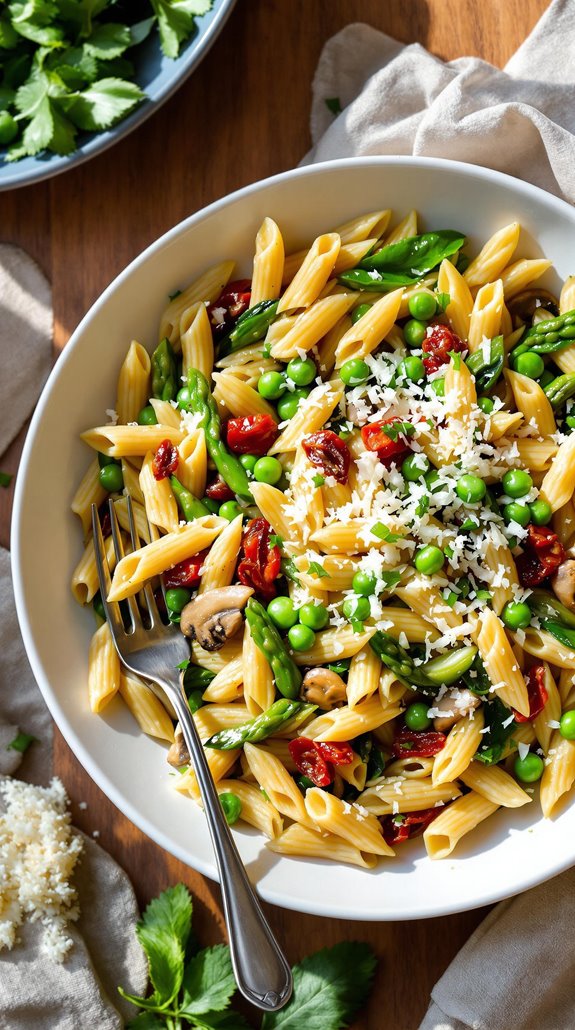

Why You’ll Love this Light & Fresh Pasta Primavera
While traditional pasta primavera can leave you feeling weighed down, this lightened-up version delivers all the flavor without the heaviness. I’ve swapped heavy cream for chicken stock and incorporated whole wheat penne, giving you fiber and nutrition without sacrificing taste.
The combination of shiitake and cremini mushrooms creates an earthy depth, while asparagus and baby spinach add vibrant color and fresh flavor. Remember those sun-dried tomatoes? They pack concentrated umami in every bite. Who needs a cream sauce when you’ve got this much natural flavor?
The touch of olive oil at serving time gives just enough richness, and a sprinkle of Parmesan adds that satisfying savory finish. It’s comfort food you can feel good about—perfect for spring evenings or meal prep for busy weekdays.
What Ingredients are in Light & Fresh Pasta Primavera?
Pasta primavera is the perfect light and fresh dinner option when you’re craving something satisfying yet not too heavy. This vibrant dish combines whole grain pasta with a rainbow of spring vegetables and just enough savory elements to make it truly delicious. And the best part? It comes together relatively quickly for a nutrient-packed meal that feels like something you’d order at your favorite Italian restaurant.
- 3/4 pound whole wheat or whole-grain penne pasta
- 1 pound medium asparagus, cut into 1 1/2-inch sections
- 1 (15 ounce) can chicken stock
- 1/4 teaspoon salt, plus pepper to taste
- 1 1/2 tablespoons olive oil, plus 2 teaspoons extra for serving
- 4 garlic cloves, sliced
- 1/4 red onion, chopped small
- 1/8 teaspoon red pepper flakes
- 4 ounces shiitake mushrooms, stemmed and sliced
- 4 ounces cremini mushrooms, trimmed and quartered
- 1 cup frozen peas
- 2 pieces sun-dried tomatoes
- 2 tablespoons fresh parsley, chopped
- 1/2 cup Parmesan cheese, chopped
- 6 ounces baby spinach
- 2 scallions, chopped
When shopping for these ingredients, quality matters—especially for the vegetables. Fresh asparagus should be firm with closed tips, and mushrooms should be dry, not slimy. The whole wheat pasta provides more fiber than regular pasta, making this a more nutritious option. And while the recipe calls for specific mushroom varieties, you could substitute with whatever mushrooms are available or in season at your market. Just remember that the vegetables are the stars of this primavera dish, so choose the freshest ones you can find.
How to Make this Light & Fresh Pasta Primavera
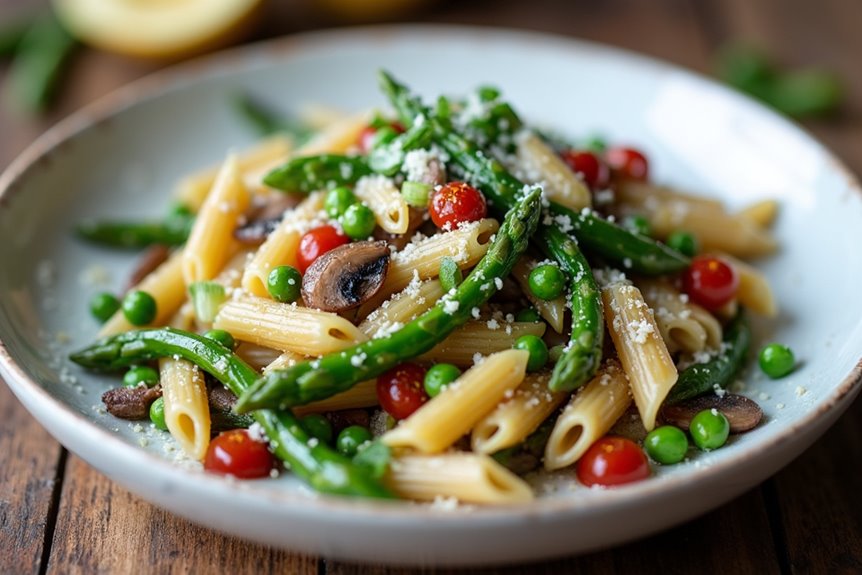
To begin this lighter version of a classic pasta primavera, bring a large pot of salted water to a boil for your 3/4 pound of whole wheat penne. While that’s heating up, you’ll want to prepare the vegetables.
Take 1 pound of medium asparagus, cut into 1 1/2-inch sections, and combine it with 1/4 cup of chicken stock and 1/4 teaspoon salt in a large skillet. Cover and cook over medium heat until the asparagus is al dente, which should take between 3 to 5 minutes. The asparagus should still have a bit of bite to it—nobody wants mushy asparagus in their primavera, trust me. Once done, transfer the asparagus and any remaining stock to a bowl and set aside.
Using the same skillet (fewer dishes, always a win), heat 1 1/2 tablespoons of olive oil with 4 sliced garlic cloves, 1/4 chopped red onion, and 1/8 teaspoon red pepper flakes. This aromatic base is where all the magic happens. Add your 4 ounces each of sliced shiitake and quartered cremini mushrooms, cooking until they release their moisture and begin to brown.
Next, stir in 1 cup of frozen peas, 2 pieces of sun-dried tomatoes, 2 tablespoons of fresh chopped parsley, and the cooked asparagus. At this point, your kitchen should smell absolutely heavenly. For an even more authentic Italian experience, consider using a premium pasta maker to create fresh homemade pasta instead of store-bought. Fold in 6 ounces of baby spinach and let it wilt into the mixture. When your pasta is cooked to al dente perfection, drain it and toss it with the vegetable mixture, adding the 1/2 cup of chopped Parmesan cheese and 2 chopped scallions. A final drizzle of those 2 teaspoons of olive oil gives the dish a beautiful finish and enhances all those fresh flavors.
Light & Fresh Pasta Primavera Substitutions and Variations
One of the best things about this lighter pasta primavera is how incredibly versatile it can be with whatever ingredients you have on hand. Don’t have shiitake mushrooms? Regular button mushrooms work perfectly. The whole wheat penne can be swapped for any pasta shape you’re craving—bowties, rotini, or even spaghetti.
Vegetarian? Simply use vegetable broth instead of chicken stock. For a protein boost, I’d toss in some cannellini beans or chickpeas. You can also substitute seasonal vegetables based on what’s fresh—zucchini and bell peppers in summer, or butternut squash in fall.
The spinach could be kale or arugula if that’s what’s in your fridge. And let’s be honest, who hasn’t forgotten to buy an ingredient only to discover the perfect substitute was hiding in your kitchen all along?
What to Serve with Light & Fresh Pasta Primavera
Now that we’ve explored all the ways to customize this flexible primavera recipe, let’s talk about what pairs perfectly with this lighter pasta dish.
I’m a firm believer that a crisp, chilled glass of Pinot Grigio or Sauvignon Blanc complements the veggie-forward flavors beautifully. For a non-alcoholic option, try sparkling water with a squeeze of lemon.
A simple side salad with arugula, lemon vinaigrette, and shaved parmesan makes this a complete meal. Or, go for garlic bread—because when isn’t garlic bread a good idea? Just a few slices of crusty ciabatta, brushed with olive oil and rubbed with garlic cloves, then toasted until golden. Nothing fancy, just deliciously satisfying.
Final Thoughts
After making this lightened-up Pasta Primavera countless times, I’m convinced it’s one of those rare recipes that proves healthy eating doesn’t require sacrifice. The whole wheat pasta provides satisfying texture while the vibrant vegetables create a symphony of colors and flavors that dance on your palate.
What I love most is how versatile this dish can be. Don’t have shiitakes? Swap in whatever mushrooms are available. Can’t find asparagus? Green beans work beautifully. The core technique—lightly cooking vegetables to maintain their nutrients and crunch—remains the same.
Isn’t it wonderful when something this nutritious tastes this good? And with minimal cleanup required, it’s perfect for those evenings when you want something nourishing without spending hours in the kitchen.