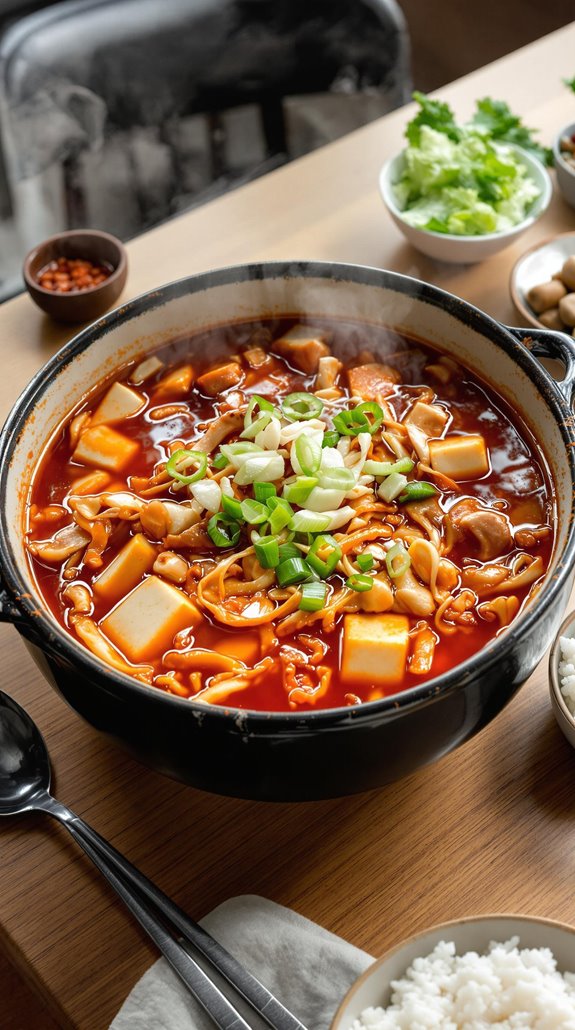

Why You’ll Love this Korean Kimchi Jjigae Soup
This hearty Korean stew is the ultimate comfort food you didn’t know you needed in your life. The rich, spicy broth delivers a perfect balance of tangy fermented kimchi and savory depth that’ll warm you from the inside out. Trust me, there’s something magical about that combination of tender pork, silky tofu, and perfectly aged kimchi simmering together.
What makes it so crave-worthy? Maybe it’s how the gochugaru and gochujang create layers of complex heat rather than just burning your taste buds. Or perhaps it’s the way the kimchi transforms when cooked, mellowing into something entirely new. Ready in about 30 minutes with minimal prep work. Perfect for chilly evenings when you want something soul-warming but don’t feel like spending hours in the kitchen.
What Ingredients are in Korean Kimchi Jjigae Soup?
Korean Kimchi Jjigae is a hearty, soul-warming soup that brings together the perfect balance of spicy, tangy, and savory flavors. This traditional Korean dish features fermented kimchi as its star ingredient, creating a rich broth that’s both complex and comforting. The beauty of this soup lies in its simplicity—just a handful of ingredients coming together to create something truly remarkable.
When shopping for these ingredients, the quality of your kimchi makes all the difference. Look for properly fermented, sour kimchi rather than fresh—it’s this fermentation that gives the soup its distinctive depth. Korean chili flakes and paste might require a trip to an Asian grocery store or can be found online, and they’re worth seeking out for authentic flavor. Can’t find Anaheim peppers? Regular green chilies work fine, or you can adjust the spice level according to your preference. The tofu provides a lovely textural contrast to the tender vegetables and meat, absorbing all those wonderful flavors.
- 1/8 pound pork loin (optional for vegetarian version)
- 1 tablespoon rice wine
- 1 cup sour kimchee, cut into 1-inch pieces (reserve juice)
- 1/4 white onion, sliced
- 1 green onion, sliced
- 1/4 cup mushrooms (regular or shiitake)
- 3 tablespoons sliced Anaheim green chili peppers
- 1 cup extra firm tofu, cut into 1/4-inch slices
- 1 1/2 cups water
- Vegetable oil for cooking
- 4 teaspoons Korean chili flakes (gochugaru)
- 2 teaspoons Korean chili paste (gochujang)
- 4 teaspoons soy sauce
- 1/2 teaspoon minced garlic (fresh or bottled)
- Black pepper to taste
How to Make this Korean Kimchi Jjigae Soup
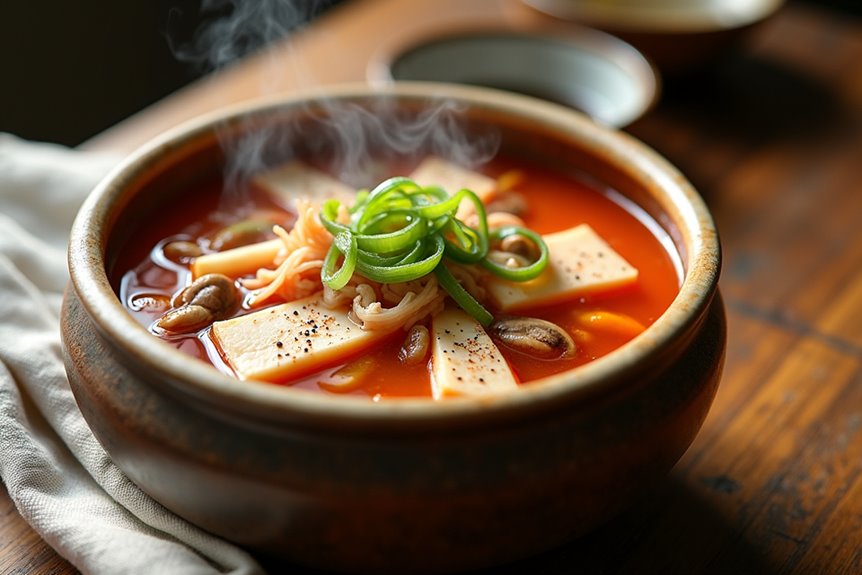
Start by prepping all your ingredients—this is a dish that comes together quickly once you begin cooking. Cut 1 cup of sour kimchi into 1-inch pieces (reserve that flavorful juice!), slice 1/4 white onion and a green onion, cut 1/4 cup of mushrooms, and slice 3 tablespoons of Anaheim green chili peppers. For the protein components, cut 1 cup of extra firm tofu into 1/4-inch slices and, if you’re not making the vegetarian version, rinse 1/8 pound of pork loin and cut it into thin strips. Marinate the pork in 1 tablespoon of rice wine with a couple pinches of black pepper for about 15 minutes—you can actually do this right in your stew pot while you handle other prep work.
While the meat marinates, coat a pan with vegetable oil and cook the kimchi over medium-high heat for 5-7 minutes, stirring frequently until it becomes slightly translucent. This cooking process really transforms the kimchi, mellowing some of its sharper notes while concentrating its complex flavors.
In a separate bowl, you’ll want to create your seasoning mixture by combining 4 teaspoons of Korean chili flakes (gochugaru), 2 teaspoons of Korean chili paste (gochujang), 4 teaspoons of soy sauce, 1/2 teaspoon of minced garlic, and a few pinches of black pepper. This spice blend is what gives kimchi jjigae its signature depth and warmth—that perfect balance of spicy, savory, and slightly funky flavors that makes Korean food so craveable.
The recipe seems to be cut off in the instructions, but typically you’d combine the cooked kimchi, marinated meat, vegetables, tofu, water, and seasoning mixture in your pot. For the best results, consider using premium cooking appliances designed for authentic ethnic cuisine preparation. Bring everything to a boil, then reduce to a simmer until the pork is cooked through and the flavors have melded together—usually about 20-30 minutes. The resulting soup should be richly red, deeply flavorful, and wonderfully warming. Don’t you just love how the tofu soaks up all those spicy kimchi flavors? It’s the perfect counterbalance to the tang and heat of the broth.
Korean Kimchi Jjigae Soup Substitutions and Variations
While traditional kimchi jjigae follows a time-honored formula, you can easily adapt this versatile Korean soup to suit your dietary needs or pantry limitations.
For vegetarians, simply omit the pork and add more mushrooms—shiitakes work wonderfully for their meaty texture. Not a tofu fan? Try using soft-boiled eggs instead. They create a similar silky texture when stirred into the hot broth.
Don’t have gochujang? In a pinch, I mix sriracha with a bit of miso paste. The flavor profile isn’t identical, but it’ll do when that kimchi craving hits.
For a seafood version, swap the pork for shrimp or even a white fish. And if your kimchi isn’t quite sour enough? Add a splash of rice vinegar. Trust me, it works.
What to Serve with Korean Kimchi Jjigae Soup
What’s the point of making a steaming pot of kimchi jjigae if you don’t have the perfect companions to round out your meal?
I always serve mine with steamed white rice—it’s non-negotiable. The fluffy grains soak up that spicy, tangy broth beautifully.
Add some banchan (side dishes) to create a proper Korean spread; kimchi (yes, more kimchi), quick cucumber pickles, or seasoned spinach work wonderfully.
For something invigorating to balance the heat, a simple green salad with sesame dressing does the trick. Cold beer or soju makes a traditional pairing, while barley tea offers a non-alcoholic alternative.
And don’t forget a fried egg on top of your rice—that runny yolk mixing with everything else? Pure magic. Trust me, these accompaniments transform your jjigae from mere soup to a complete feast.
Final Thoughts
Everyone who tries kimchi jjigae seems to fall in love with its complex layers of flavor. There’s something magical about the way the sour kimchi mellows into a rich, comforting broth that warms you from the inside out. It’s comfort food with an edge, don’t you think?
What I appreciate most about this recipe is its versatility. Can’t find pork loin? Substitute chicken or go vegetarian. Not a tofu fan? Simply leave it out. The soul of this dish remains intact regardless of minor tweaks.