
Why You’ll Love these British Fish & Chips
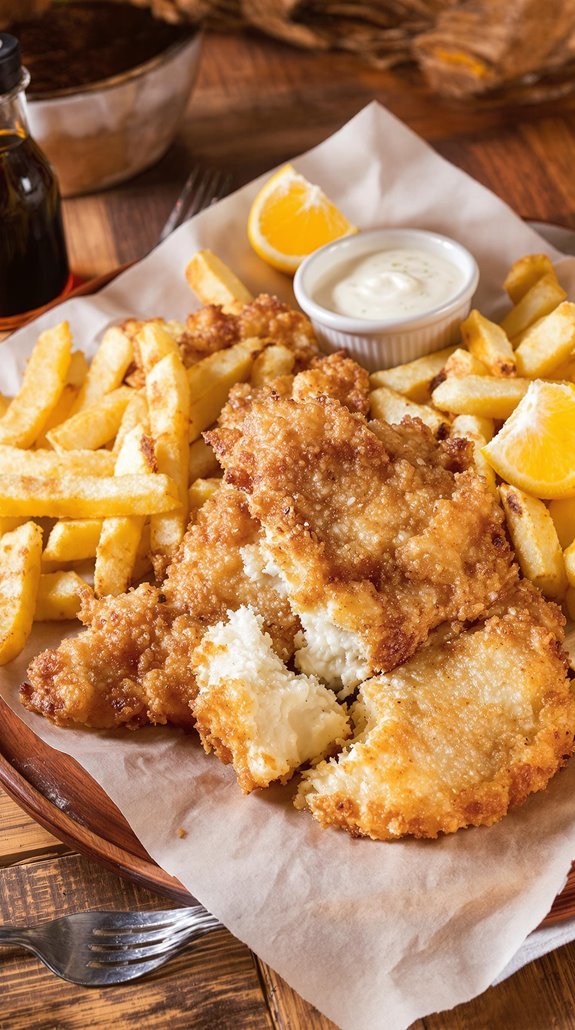
When you’re craving a taste of British comfort food, nothing quite hits the spot like authentic fish and chips. I’m talking about that perfect combination of flaky white fish in crispy, golden batter alongside thick-cut chips with just the right amount of fluff inside. What makes this recipe special? The batter uses a touch of vinegar and baking soda for that signature airy crunch that shatters beautifully with each bite. No soggy coating here, friends.
The contrast of textures is divine – tender fish against crisp coating, fluffy potato interior against crispy exterior. Plus, you can customize your serving style. Sprinkle with malt vinegar for that tangy kick, add a squeeze of lemon, or dip into tartar sauce. Traditional pub fare at home, without the plane ticket.
What Ingredients are in British Fish & Chips?
Making authentic British fish and chips at home is easier than you might think. This classic comfort food pairs crispy, golden-battered fish with perfectly fried potato chips (or as Americans call them, fries). The key to success lies in using fresh ingredients and getting the batter just right – light and crispy, never soggy.
Let’s take a look at everything you’ll need to recreate this beloved British dish in your own kitchen.
- 1 pound haddock or other lean fish fillets
- 4 potatoes
- 2/3 cup all-purpose flour (plus 1/4 cup separated)
- 1/2 teaspoon salt
- 1/2 teaspoon baking soda
- 1 tablespoon vinegar
- 2/3 cup water
- Corn oil (enough for deep frying, 2-3 inches)
- Sea salt and freshly ground black pepper, to taste
- Malt vinegar (optional, for serving)
- Lemon wedges (optional, for serving)
- Tartar sauce (optional, for serving)
When shopping for ingredients, the fish selection matters quite a bit. While haddock is traditional, any firm white fish like cod, pollock, or even halibut will work beautifully. For the potatoes, choose starchy varieties like Russets for the crispiest chips. And don’t skip the malt vinegar if you can find it – that tangy finish is what gives authentic fish and chips its distinctive British character.
The batter ingredients might seem simple, but they work together to create that perfect light, crispy coating that makes this dish so irresistible.
How to Make these British Fish & Chips
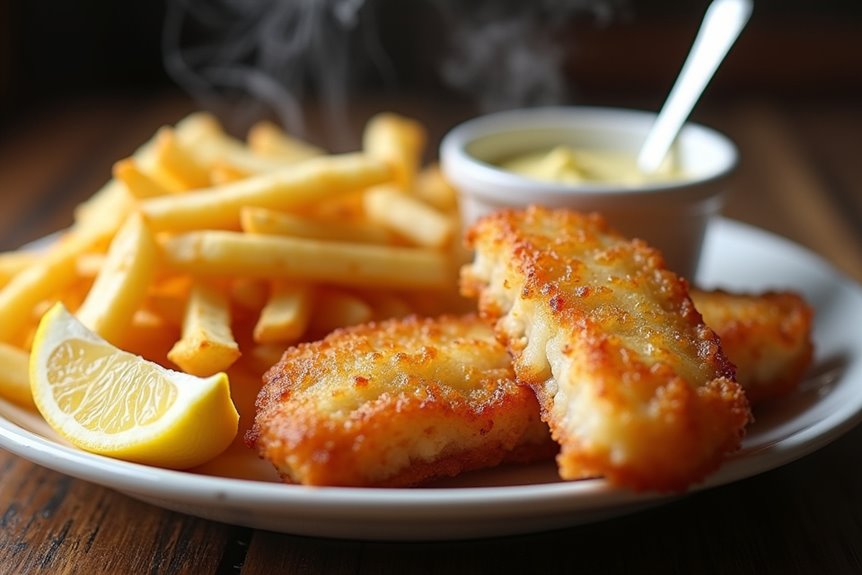
To start making these classic British fish and chips, begin by preparing your potatoes. Cut 4 potatoes lengthwise into ½-inch strips—these will become your perfect chips. Meanwhile, take 1 pound of haddock (or another lean fish fillet) and cut it into manageable 2 x 1½-inch pieces. Pat the fish dry with paper towels and season with sea salt and freshly ground black pepper to taste. Proper drying is essential here, as moisture is the enemy of crispy batter.
Next, heat your corn oil in a deep fryer or Dutch oven to 375°F—you’ll need enough oil to cover the food, about 2 to 3 inches deep. For the batter, mix 2/3 cup all-purpose flour with 1/2 teaspoon salt and 1/2 teaspoon baking soda in a bowl. In a separate container, combine 1 tablespoon vinegar with 2/3 cup water, then gradually add this liquid to your dry ingredients, whisking until smooth. Dredge your seasoned fish pieces in the remaining 1/4 cup of flour first, then dip them in the batter.
Cook the chips in small batches, filling your fryer basket just one-fourth full and lowering it slowly into the hot oil. Fry for 5-7 minutes until golden brown, then drain on paper towels and keep warm in a single layer on a cookie sheet while you cook the remaining batches. Using quality cast iron cookware provides excellent heat retention for achieving that perfect golden-brown finish on both fish and chips.
The traditional way to serve these is with malt vinegar sprinkled over the top, a wedge of lemon on the side, and a dollop of tartar sauce for dipping. The contrast between the crispy exterior and the tender fish inside is what makes this dish so beloved. Who needs a pub when you can create this British classic right in your own kitchen?
British Fish & Chips Substitutions and Variations
While authentic British fish and chips traditionally calls for specific ingredients, you can easily adapt this classic dish to suit your pantry or dietary preferences. I’m all about flexibility in the kitchen!
For the fish, haddock is classic, but cod, pollock, or even tilapia work beautifully. Can’t find malt vinegar? Regular white vinegar gives you that tangy kick too.
For a lighter version, try air-frying both components or baking the fish with a panko coating. Gluten-free? Swap in rice flour or cornstarch for the batter.
The potatoes can be sweet potatoes for a nutrient boost, or try thick-cut zucchini fries for a lower-carb option. Want more flavor? Add smoked paprika or garlic powder to your batter. So many delicious possibilities!
What to Serve with British Fish & Chips
No traditional British fish and chips experience would be complete without the perfect accompaniments to round out your meal. Malt vinegar is an absolute must-have, offering that sharp, tangy bite that cuts through the richness of the fried fish. I always keep a bottle on my table for liberal sprinkling.
Tartar sauce, with its creamy, pickle-studded goodness, provides a cooling contrast that’s simply divine with hot fish. Fresh lemon wedges add a bright, citrusy zing that wakes up your palate between bites.
Want to go full British? Serve with mushy peas (trust me, they’re better than they sound) or a side of curry sauce for dipping. And while our recipe skips it, a cold pint of beer is the traditional beverage pairing—though a crisp cider works wonderfully too.
Final Thoughts
Making fish and chips at home brings a piece of British culinary heritage right to your kitchen table. There’s something deeply satisfying about that first bite through crispy batter into flaky fish, followed by the perfect chip—golden outside, fluffy inside.
While it might seem intimidating at first (hot oil and timing can be tricky), trust me, you’ll get better with each batch. The key is patience with the oil temperature and not overcrowding your fryer.
Remember those little details—the malt vinegar splash, a squeeze of lemon, or dollop of tartar sauce—they’re what elevates this from good to authentic.
Nothing beats gathering around the table for this comforting classic, newspaper optional but highly recommended for the full experience.