Why You’ll Love these Soul-Warming Japchae
Once you’ve tried these glass noodles, there’s simply no going back to ordinary takeout. These chewy, slightly sweet dangmyun noodles absorb all the savory flavors from the soy sauce and sesame oil, creating the perfect canvas for the colorful vegetables and tender beef.
I’m obsessed with how each ingredient maintains its distinct texture—crisp carrots, wilted spinach, and those earthy mushrooms that practically melt in your mouth. The balance of sweet, savory, and nutty flavors? Absolute perfection.
And can we talk about how gorgeous this dish looks on the table? Those glistening noodles studded with vibrant vegetables make for a stunning presentation that’ll have everyone reaching for seconds. Trust me, this is comfort food that nourishes both body and soul.
What Ingredients are in Soul-Warming Japchae?
Japchae is a colorful, flavorful Korean dish that brings together the perfect balance of chewy noodles, tender vegetables, and savory protein. The ingredients create a beautiful harmony of textures and tastes, with the signature sweet-savory sauce coating each strand of those distinctive glass noodles.
Ready to gather everything you need for this crowd-pleasing dish? Let’s break down the shopping list.
- 150g Korean starch noodles (dangmyun)
- 150g beef
- 1 bunch spinach
- 1 medium carrot, cut into thin matchsticks
- 1 medium onion, thinly sliced
- 5 dried shiitake mushrooms
- 2 cups sliced white mushrooms
- 3 garlic cloves, minced
- 7-8 green onions, cut into 7cm long pieces
- 4 tablespoons soy sauce (divided)
- 4 tablespoons sesame oil (divided)
- Olive oil
- 3 tablespoons sugar
- 1 teaspoon pepper
- 1 tablespoon toasted sesame seeds
What makes japchae special is the quality of the ingredients. The dangmyun noodles are non-negotiable—these sweet potato starch noodles give the dish its signature chewy texture and translucent appearance. For vegetarians, the beef can easily be omitted or substituted with tofu. And while the recipe calls for specific mushrooms, don’t stress if you can’t find dried shiitakes; regular button mushrooms will work in a vital role, though you’ll miss some of that deep umami flavor that makes japchae so crave-worthy. The sesame oil and seeds are indispensable for that authentic nutty finish, so try not to skip those if possible.
How to Make these Soul-Warming Japchae
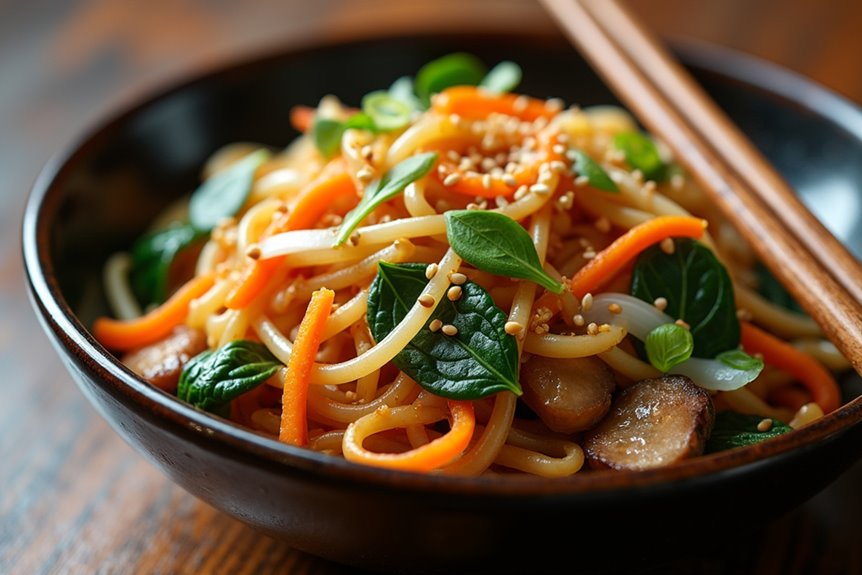
The magic of japchae begins with proper noodle preparation. Start by boiling 2 bunches of Korean starch noodles (dangmyun) in a large pot of water for about 3 minutes until they become soft and pliable. Once they reach that perfect tender stage (go ahead and taste one to be sure), drain them and transfer to a large bowl. Now comes a little noodle surgery—grab your kitchen scissors and cut through the noodles several times to make them more manageable for eating. Season these freshly cooked noodles with 1 tablespoon of soy sauce and 1 tablespoon of sesame oil, giving them a good toss to coat evenly.
While your noodles rest, focus on preparing the other components. Those 5 dried shiitake mushrooms need a few hours of soaking in warm water to rehydrate—patience guarantees success here, trust me. Once they’re plump and soft, squeeze out the excess water and slice them thinly.
For the remaining ingredients, it’s all about creating uniform, delicate pieces: slice your onion thinly, cut your carrot into matchsticks, and trim your green onions into 7 cm pieces. This thoughtful prep work isn’t just for show; it guarantees everything cooks evenly and creates that signature japchae texture where each bite offers a little bit of everything.
For the ultimate flavor development, consider stir-frying your vegetables in a cast iron skillet which provides exceptional heat retention and distribution. The final assembly brings all these beautiful ingredients together in harmony. You’ll be using the remaining 3 tablespoons of soy sauce and 3 tablespoons of sesame oil, along with 3 tablespoons of sugar and 1 teaspoon of pepper to create that perfect balance of sweet, savory, and nutty flavors that makes japchae so irresistible. Don’t forget to finish with a sprinkle of 1 tablespoon of toasted sesame seeds—they add a wonderful texture and that final aromatic touch that makes this dish truly authentic. Who knew such humble ingredients could transform into something so spectacular?
Soul-Warming Japchae Substitutions and Variations
While traditional japchae calls for specific ingredients, you can easily branch out with delicious substitutions that maintain its soul-warming essence. Don’t have dangmyeon? Sweet potato glass noodles work beautifully, or try rice noodles in a pinch. The protein is flexible too—swap beef for chicken, pork, tofu, or skip it altogether for a vegetarian version.
Can’t find shiitake mushrooms? Button or cremini mushrooms deliver that earthy flavor. And the vegetables? That’s where you can really play. Bell peppers add lovely color, zucchini brings freshness, and bok choy offers crunch. Even the spinach can be replaced with kale or Swiss chard.
For a spicier kick, I love adding a tablespoon of gochujang. Want it sweeter? A drizzle of honey instead of sugar creates magic with minimal effort.
What to Serve with Soul-Warming Japchae
As a perfect accompaniment to your soul-warming japchae, Korean side dishes known as banchan create a balanced and authentic dining experience. I love pairing japchae with kimchi, which adds that perfect tangy crunch to contrast with the sweet, savory noodles.
Quick cucumber pickles or gamja jorim (braised potatoes) are wonderful options too, requiring minimal effort but maximizing flavor impact. For protein lovers, bulgogi or galbi make this a heartier meal, while a simple bowl of steamed rice transforms japchae from side dish to main event.
Don’t forget a small bowl of clear doenjang soup on the side—its mild, earthy flavor cleanses the palate between bites. Trust me, the combination of textures and flavors will transport you straight to a traditional Korean table.
Final Thoughts
Crafting homemade japchae brings more than just delicious flavors to your table—it connects you to centuries of Korean culinary tradition with every bite. There’s something magical about watching those glossy, translucent noodles soak up the perfect balance of soy, sesame, and sweetness.
I’m convinced that japchae is one of those dishes that rewards patience. Taking time to properly prepare each ingredient separately might seem fussy, but trust me, it’s what transforms this from an ordinary noodle dish into something extraordinary. The contrasting textures—tender beef, crisp vegetables, chewy noodles—create a symphony in your mouth.
Can you think of another dish that works equally well as a show-stopping dinner party centerpiece or comforting weeknight meal? Versatile, beautiful, and deeply satisfying, japchae deserves a permanent spot in your recipe rotation.