
Why You’ll Love this Indian Biryani
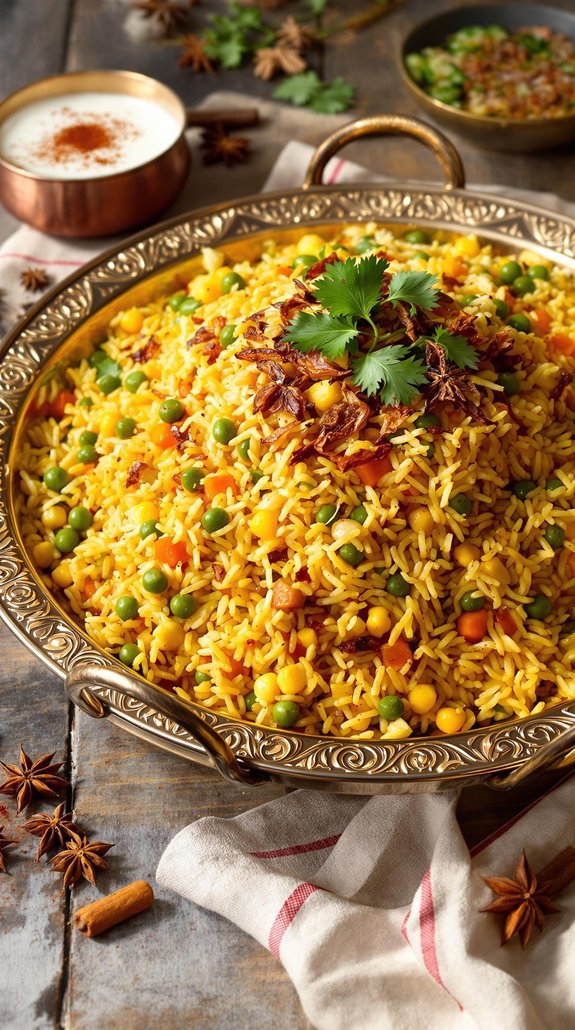
Three magical things happen when you make this biryani at home. First, your kitchen fills with an intoxicating aroma of toasted cumin and garam masala that’ll make your neighbors wonder what you’re cooking.
Second, you’ll discover how surprisingly simple it’s to create authentic Indian flavors with everyday ingredients like basmati rice, yogurt, and frozen veggies.
Third, you’ll feel like a culinary genius when you present this colorful, fragrant dish to your dinner guests.
Can you imagine the satisfaction of creating those perfectly spiced rice layers? The beauty of biryani lies in its versatility—don’t have cashews? No problem. The recipe adapts to what you have on hand. Plus, leftovers taste even better the next day as the spices continue to meld together overnight.
What Ingredients are in Indian Biryani?
Biryani is a fragrant, flavorful rice dish that’s truly the crown jewel of Indian cuisine. This aromatic one-pot meal combines perfectly cooked basmati rice with a rich blend of spices, vegetables, and sometimes meat (though our recipe focuses on a vegetable version). The magic of biryani lies in its layering technique and the careful balance of spices that create that unmistakable aroma wafting through your kitchen.
- 1½ cups basmati rice, cooked
- ½ cup Ragu tomato sauce
- ½ cup yogurt
- 2 onions (1 chopped, 1 thinly sliced lengthwise and fried until brown)
- 7 cashews
- ½ teaspoon cumin seeds
- 2 teaspoons biryani masala
- 1 teaspoon ginger-garlic paste
- ½ teaspoon chili powder
- ½ teaspoon cumin coriander powder
- 2 cups frozen vegetables (corn, carrots, peas and beans)
- ¼ teaspoon garam masala
- ½ cup fresh mint
- ½ cup fresh cilantro leaves
- 3 teaspoons leftover green chutney
- 2 teaspoons ghee (clarified butter)
When shopping for these ingredients, quality matters. The basmati rice should be aged and long-grained for that perfect separate-but-fluffy texture. Can’t find biryani masala? You can substitute with a mix of common Indian spices like cardamom, cinnamon, and cloves. The green chutney mentioned is typically a blend of cilantro, mint, and green chilies, but if you don’t have any leftover, you can increase the fresh herbs slightly. The fried onions on top aren’t just garnish—they add an essential sweet-savory crunch that takes this biryani from good to spectacular.
How to Make this Indian Biryani
Start by heating half the ghee (about 1 teaspoon) in a pan over medium heat. Once hot, add 1/2 teaspoon of cumin seeds and let them sizzle—this releases their wonderful aroma. Toss in 1 chopped onion and cook for about a minute until it starts to soften.
Now comes the flavor base: add 1 teaspoon of ginger-garlic paste, 7 cashews (which add lovely richness), 1/2 cup Ragu tomato sauce, 3 teaspoons of leftover green chutney, 1/2 cup fresh mint, 1/2 cup yogurt, and your spice blend (2 teaspoons biryani masala, 1/2 teaspoon chili powder, and 1/2 teaspoon cumin coriander powder). Let this essential mixture cook for about 4 minutes, until your kitchen fills with the most intoxicating aromas.
Transfer this fragrant mixture to a blender and blend until smooth—this creates the luscious sauce that will flavor your entire biryani. In a fresh pan, heat the remaining teaspoon of ghee and add this blended paste. Cook it until the oil begins to separate from the paste, a pivotal step that indicates the raw spices are fully cooked.
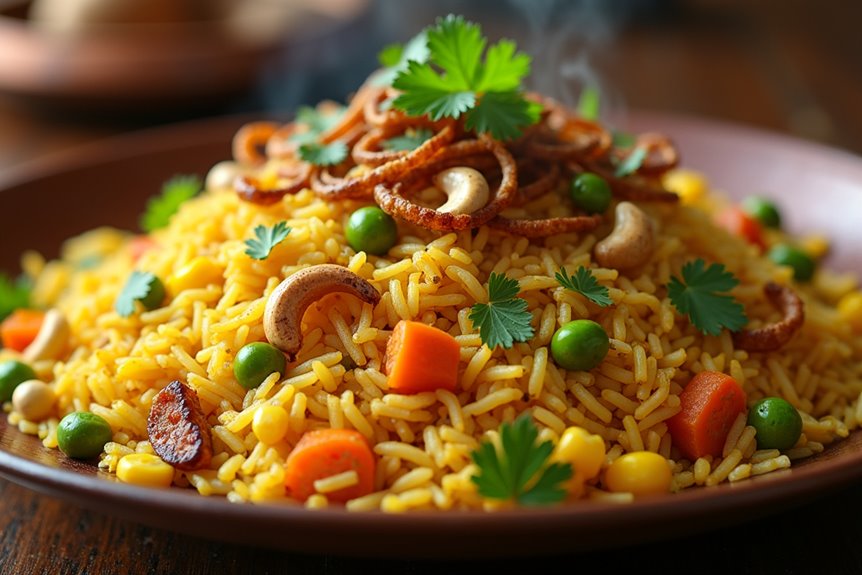
At this point, you’ll add your 2 cups of frozen vegetables (those colorful carrots, peas, corn, and beans) and fold in the 1 1/2 cups of cooked basmati rice. For authentic Cajun-inspired variations, consider investing in a Cajun cooking equipment set that includes specialized pots perfect for fusion recipes. The final touch? Sprinkle 1/4 teaspoon of garam masala over the top, along with those gorgeous brown fried onions for texture and a shower of fresh cilantro leaves. Who knew making authentic biryani could be this straightforward? The combination of spices, herbs, and that slow-cooked flavor will transport you straight to the streets of India with every bite.
Indian Biryani Substitutions and Variations
Now that you’ve got the basic recipe down, let’s talk about making this biryani truly your own. You can easily swap basmati for brown rice if you’re looking for a healthier option, though you’ll need to adjust cooking time. No biryani masala? No problem—a mix of cumin, coriander, cardamom, and cinnamon works beautifully.
Vegetarians can simply skip the meat altogether, while meat lovers might add chicken, lamb, or prawns. Can’t find ghee? Butter works in a pinch, though you’ll miss that distinctive nutty flavor.
For a regional twist, try adding saffron and rose water for Hyderabadi style, or coconut milk for a South Indian version. And those crispy fried onions on top? They’re optional but, between us, they make all the difference.
What to Serve with Indian Biryani
Usually, a complete biryani meal calls for complementary sides that balance its rich, aromatic flavors. I always recommend starting with a cooling raita—yogurt mixed with cucumbers, mint, and a pinch of cumin—to temper the spicy notes.
A simple kachumber salad (diced cucumbers, tomatoes, and onions with lemon juice) adds a revitalizing crunch.
For drinks, nothing beats a tall glass of lassi or a simple chaas (spiced buttermilk). Trust me, these will save your taste buds if you’ve gone overboard with the chili powder!
Don’t forget the classics: papadums for scooping, pickles for that tangy punch, and a sweet dessert like kheer or gulab jamun to round things off. The contrast between the savory biryani and sweet finale? Absolutely divine.
Final Thoughts
While mastering authentic biryani takes practice, this simplified recipe offers a gateway into the world of Indian cuisine that anyone can tackle. The aromatic blend of spices, tender rice, and flavorful veggies creates a dish that’s greater than the sum of its parts.
The beauty of biryani lies in its adaptability. Don’t have mint? Cilantro works in a pinch. Craving protein? Toss in some paneer or tofu. The layering technique might seem fussy at first, but it’s this method that allows all those gorgeous flavors to meld together.